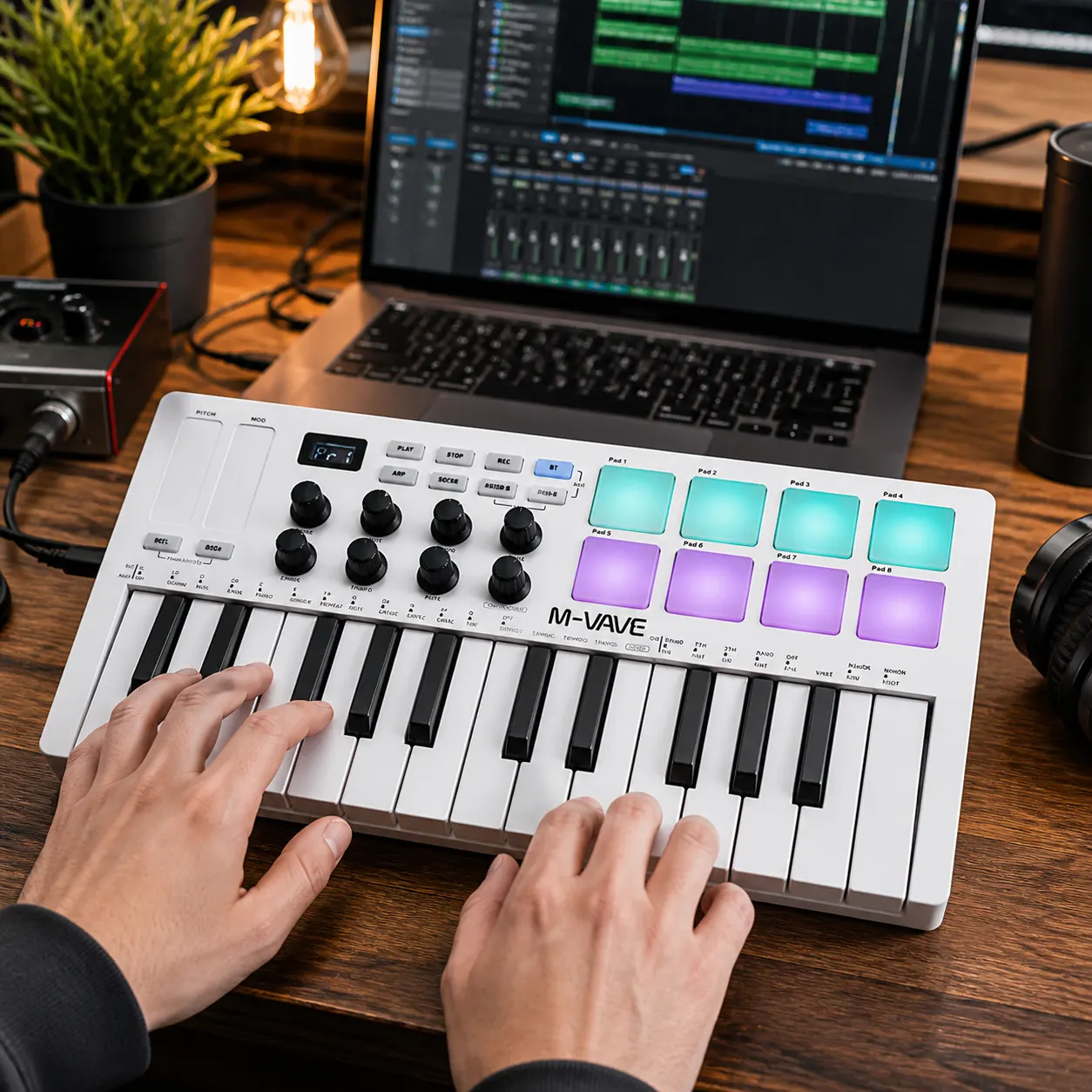
Short answer: A beginner choosing a MIDI keyboard controller in the UK should start with the first job, not the most impressive feature list. If you want to enter melodies, bass ideas and short chord parts into a DAW from a laptop desk, the M-VAVE SMK-25 White is a relevant compact category to compare. The product page confirms a 25-key MIDI keyboard controller, an SMK-25 colour configuration and ABS material. It does not confirm named software, wireless use, built-in sounds, key action, dimensions, bundled accessories or certification. Make those gaps part of the buying check.
Start with the first month of music making
Beginner purchases are easier to judge when the first month has a clear shape. Maybe you want to replace mouse-only note entry, sketch bass lines after work, or try short melodies before arranging them in a DAW. A compact controller can make those tasks more tactile without demanding a permanent studio room.
That does not mean a 25-key controller is the correct answer for every beginner. If your first month is really about piano lessons, two-handed pieces or playing without a computer, the product category is a mismatch. A smaller controller is best considered as a software input tool whose value depends on the rest of your setup.
- Write down the three musical tasks you want to make faster.
- Separate note entry from piano practice and standalone playing.
- Decide whether the controller must live on a small or shared desk.
- Use those answers as the buying brief for the exact product page.
Read the listing without filling gaps
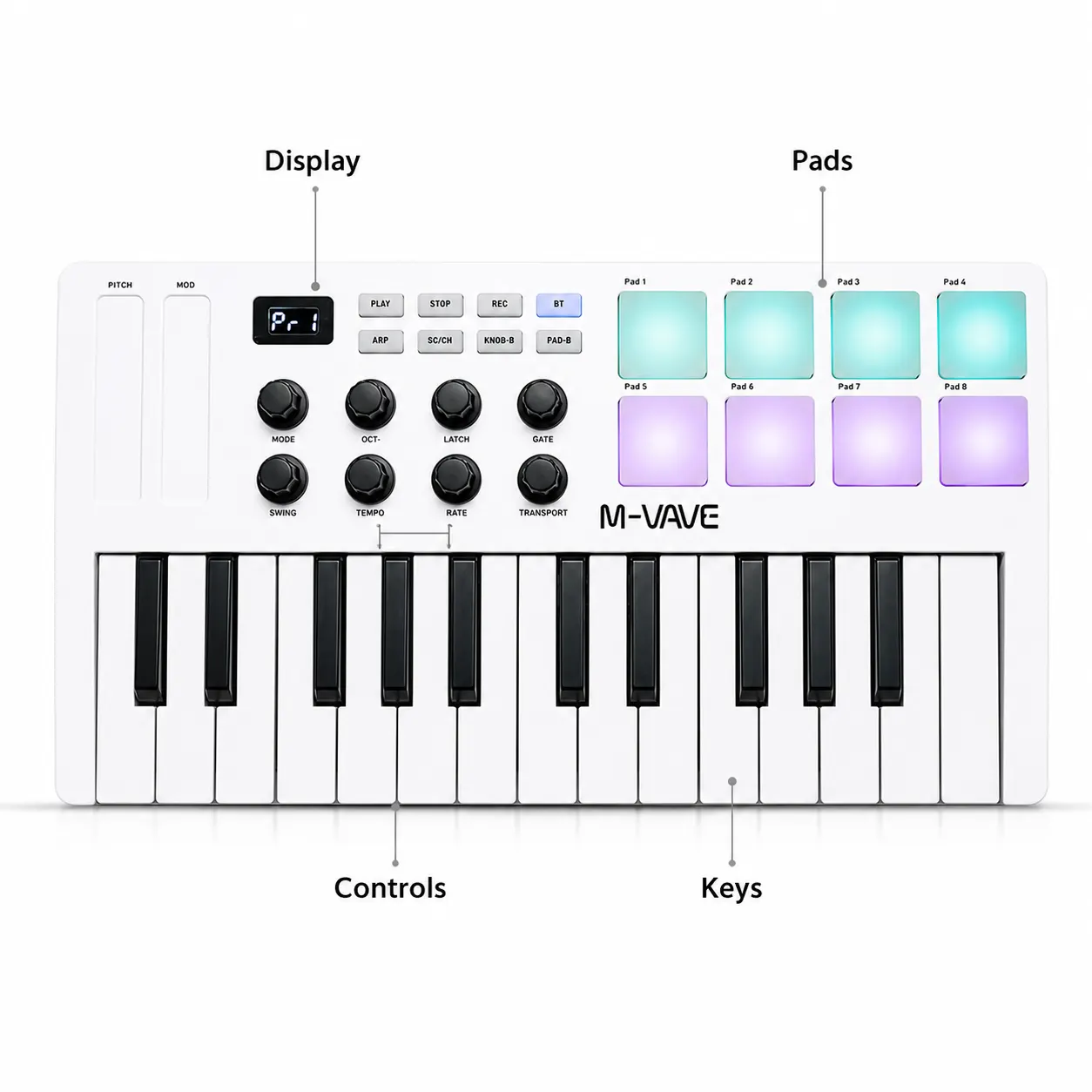
The M-VAVE SMK-25 White product page gives a narrow but usable evidence base: the selected product name, 25-key MIDI keyboard category, SMK-25 colour configuration and ABS material. That is enough to say what sort of item it is and to compare the category with your intended work.
The manufacturer does not specify bundled software, named DAW compatibility, wireless operation, built-in sounds, pad count, knob count, key action, dimensions, weight, latency or certification. Product images and the word controller should not be used to turn an unlisted feature into a promise. For a beginner, a missing fact is a question to resolve, not a reason to guess.
| Buying question | What the page supports | What remains open |
|---|---|---|
| What is the item? | M-VAVE SMK-25 White 25-Key MIDI Controller | No broader feature package is confirmed |
| What category is it? | 25-key MIDI keyboard | Key action and playing behaviour are not stated |
| Will it fit my setup? | A compact MIDI-controller use case is plausible | Connection, DAW and computer requirements need checking |
Build a low-stress compatibility note
A short compatibility note prevents the product name from doing all the decision-making. Record the computer or tablet you intend to use, the DAW or music software, the connection you expect, the first virtual instrument or sound source, and the controls you consider essential. Then compare that note with what the current page actually says.
The note should also capture the physical routine. If the controller will be stored after every session, consider whether you will still use it. If it will stay on the desk, measure the available space because the manufacturer does not specify dimensions. If you need a particular key feel, pad layout or mapping, ask for documentation before checkout.
- Computer or device and operating system.
- DAW or music software and the first task it must support.
- Required connection, controls and any accessory that cannot be missing.
- Available desk space and storage plan.
- One clear reason to choose 25 keys over a larger keyboard.
When to keep comparing
Keep comparing if the purchase depends on a feature that is not documented. That includes wireless operation, bundled software, built-in sounds, pads, knobs, faders, exact dimensions, key action, named DAW mappings or certification. The manufacturer does not specify these details on the current product page, so the responsible next step is written confirmation or a different, better-documented model.
For a beginner who simply wants a small way to enter notes, the compact category may still be sensible. For someone buying a keyboard to learn piano, perform live or build a fully specified production rig, the M-VAVE page does not establish enough. Let the missing evidence change the purchase rather than quietly turning assumptions into facts.
Related guides and product details
A beginner MIDI keyboard controller should make a repeated task easier and keep its limits visible. The M-VAVE SMK-25 is worth considering for compact DAW note entry, but verify the missing setup details before you order and choose a larger or more fully documented instrument when your goal requires it. Read Is a 25-Key MIDI Controller Beginner Friendly in the UK? for related guidance. Read Are 25 Keys Enough for a MIDI Controller? for related guidance. Review the documented specification on the M-VAVE SMK-25 White 25-Key MIDI Controller product page before ordering.
Sources and safety context
- Supports the selected M-VAVE product, 25-key category, SMK-25 configuration and ABS material. Current Backldrum product page.
- Provides general context for the MIDI term used in the product category; it does not confirm this SKU's controls or compatibility. MIDI Association: What is MIDI?.